Beginner's Guide to Fueling During Your Half Marathon
Your first half marathon comes down to more than training miles. What and when you eat during the 13.1 miles themselves can be the difference between a strong finish and hitting a wall at mile 10. This guide focuses on your in-race fueling plan: when to start taking in carbs, how much, and how to actually use aid stations without breaking stride or trying something new mid-race.
The Night Before and Race Morning, Briefly
Stick to a familiar, carb-focused dinner and a light, easy-to-digest breakfast a few hours before the start; this is not the moment to experiment. For the full pre-race meal timeline, portions, and food examples, see What to Eat and Drink Before a Half Marathon. The short version: familiar carbs, moderate fat and fiber, and enough fluid that you start the race hydrated rather than thirsty.
Your In-Race Fueling Plan
This is where most first-timers either get it right or get it wrong.
When to Start Fueling
Don't wait until you feel tired to take in your first carbs; by then you're already behind. Most runners should start fueling around 30 to 45 minutes into the race, well before any sense of fatigue sets in, and then continue on a schedule rather than waiting for a signal from your body.
How Much and How Often
Aim for roughly 30 to 60 grams of carbohydrate per hour, spread out rather than dumped in all at once.
| Time into race | What to do |
|---|---|
| 30–45 minutes | First gel, chew, or sip of sports drink |
| Every 25–30 minutes after | Repeat with a small amount of carbohydrate and water |
| Final 2–3 miles | A last gel or chews if you're fading, taken with water |
Take gels with water, not sports drink, when possible. Doubling up on concentrated carbohydrate sources can upset your stomach.
Reading and Using Aid Stations
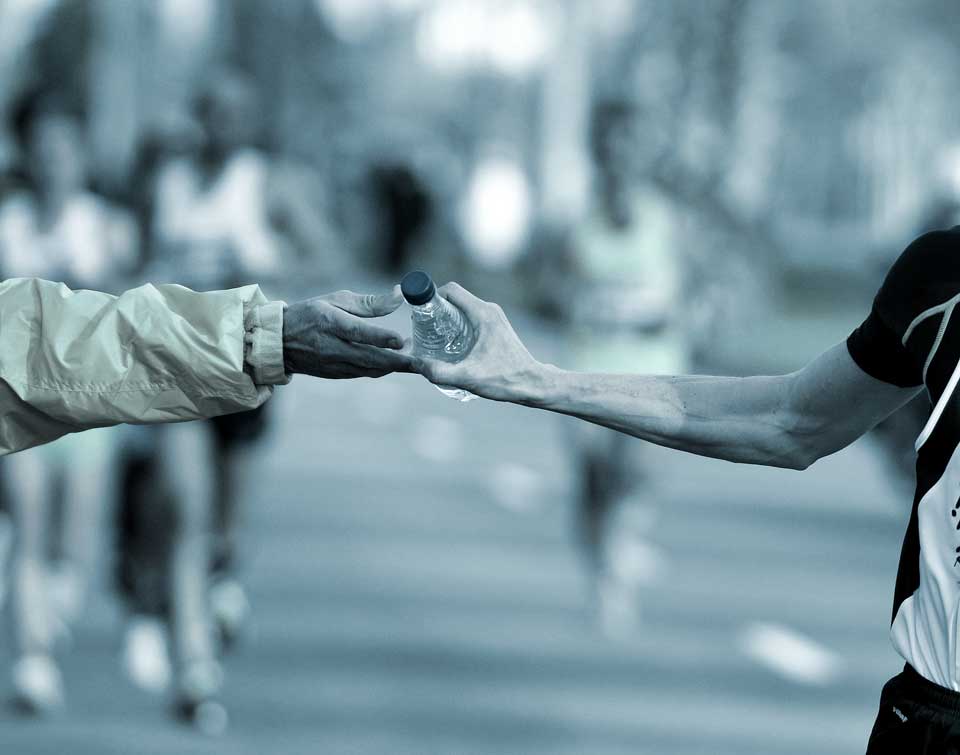
Course aid stations typically alternate water and a sports drink, often marked by different colored cups or separate tables. Check the course map or ask volunteers beforehand if you're not sure. To drink without losing much time: pinch the top of the cup to form a small spout, slow to a walk or jog for a few strides through the station, and take a few controlled sips rather than trying to gulp a full cup while running at pace.
If you don't like what a race is handing out, or you're not sure it agrees with your stomach, carry your own gels and use the aid stations for water only. This is common and nothing to feel self-conscious about; plenty of experienced runners run entirely on their own supply.
Practice Your Fueling Plan Before Race Day
Whatever plan you land on, which products, what timing, how you'll handle aid stations, rehearse it on your training long runs first. Long run fueling is where you find out which gels sit well, how your stomach handles running while drinking, and whether 30 or 60 grams an hour works better for you. Race day should feel like a routine you've already run a dozen times, not an experiment.
Hydration During the Race
Pair your carbohydrate plan with steady hydration; sip rather than gulp, and don't skip water stations because you feel fine, since thirst often lags behind actual fluid loss. For a deeper look at planning your fluid intake, including how to estimate your sweat rate, see Stellar Half Marathon Hydration, and use a hydration calculator to turn your numbers into a target for race day.
Common First-Timer Fueling Mistakes
- Waiting until you feel tired to eat. By the time you notice fatigue, you're already running on empty. Fuel on a schedule, not a feeling.
- Trying a new gel flavor or brand on race day. Test everything you plan to eat or drink during your long runs first.
- Drinking a full cup at every single aid station. This can cause stomach sloshing and GI distress; sip steadily instead.
- Skipping fuel entirely because "it's just 13.1 miles." Most runners are out there for two to three-plus hours, long enough that fueling matters for the back half.
Frequently Asked Questions
When should I start eating during a half marathon?
Start taking in carbohydrate around 30 to 45 minutes into the race, well before you feel any fatigue, and continue on a set schedule rather than waiting until you feel tired. Waiting too long to fuel makes it much harder to recover your energy once it drops.
How many carbs do I need during a half marathon?
Plan on roughly 30 to 60 grams of carbohydrate per hour from gels, chews, bananas, or sports drink, taken in small amounts every 25 to 30 minutes rather than all at once. Test this range in training so you know whether the lower or higher end works better for your stomach.
How do I use aid stations without slowing down too much?
Pinch the top of your cup to form a small spout, slow to a walk or easy jog for a few strides as you pass through the station, and take a few controlled sips rather than trying to gulp a full cup at running pace. If a station's sports drink doesn't agree with you, use it for water only and carry your own gels.
Should I try new gels or foods on race day?
No, test every product you plan to use, along with your fueling timing, during training long runs beforehand. Race day is the wrong place to discover that a new gel upsets your stomach or that you need more carbohydrate per hour than you planned.
Related Articles
Half Marathon Nutrition Guide: What to Eat Before, During & After Your Race
Master your half marathon nutrition with our complete fueling guide. Learn exactly what to eat before, during, and after your race with meal plans, timing strategies, and hydration calculations.
Why a Hydration Pack for Your Half Marathon Training is a Good Idea
Complete guide to hydration packs for half marathon training. Compare top 10 models, learn proper fit and maintenance, training strategies, race day decisions, and budget vs premium options. Everything you need for optimal hydration during long runs.
The Complete Half Marathon Nutrition Guide: Fuel Your Way to Success
Master the art and science of half marathon nutrition with this comprehensive guide. Learn optimal macronutrient ratios, timing strategies, race-day fueling protocols, and evidence-based nutrition plans that power peak performance and rapid recovery.
How to Perfect Your Hydration Strategy for Half Marathon Training
How to build a hydration strategy for half marathon training: find your sweat rate, set a daily fluid target, and know what to drink before, during, and after every run.