The 5 Largest Half Marathons in the World
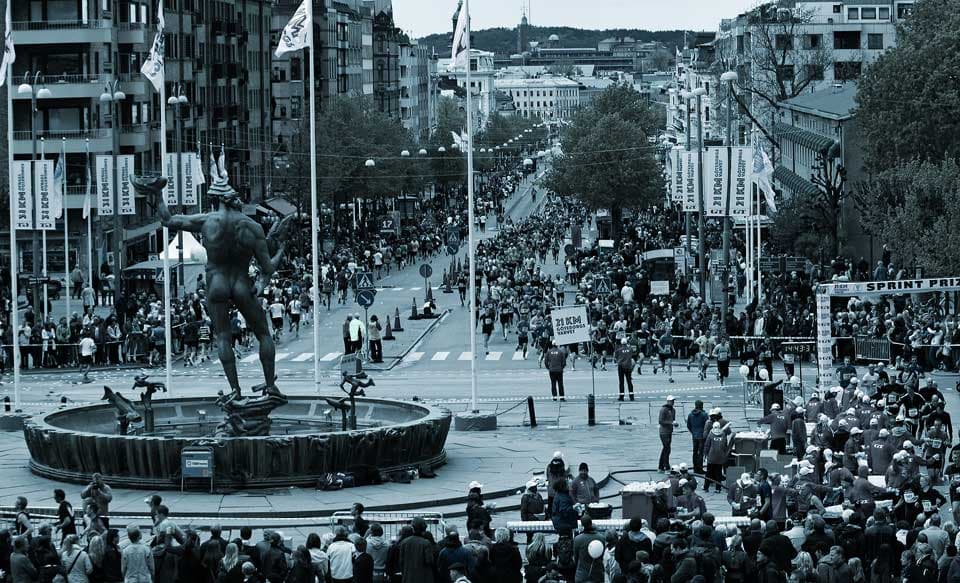
Half marathons keep growing in popularity worldwide, and a handful of races have scaled to handle truly massive fields — tens of thousands of runners on a single closed-road course. This list focuses on what makes each of these races durably massive: history, course character, and civic or charity culture, rather than a specific year's finisher count, which shifts constantly and is best confirmed directly with the race.
If you're comparing this list against the biggest races closer to home, see the 5 largest half marathons in the United States. And if you're still narrowing down which race fits you, how to find a half marathon walks through choosing by season, course, and field size.
Göteborgsvarvet — Gothenburg, Sweden
Typically held in May and run since 1980, Göteborgsvarvet has long been recognized as the world's largest half marathon by participation. What started as a small local road race has grown into a full-city event: the course closes streets across Gothenburg, and the race day itself functions as a civic festival, with live music stations positioned throughout the route to keep runners moving and spectators entertained. The field spans everything from elite East African contenders to first-time half marathoners running with friends, which is a large part of why the total headcount dwarfs most other single-day road races. Confirm current field size, entry pricing, and registration windows on the official Göteborgsvarvet site, since all three shift from year to year.
The Great North Run — Newcastle to South Shields, England
Founded in 1981 by former Olympic runner Brendan Foster, the Great North Run has grown into one of the largest half marathons on the planet and one of the UK's most prominent single-day charity fundraising events. The point-to-point course starts near the Tyne Bridge in Newcastle and finishes on the coast in South Shields, and it draws a genuinely wide field — elite professionals, celebrities running for charity, wheelchair racers, and tens of thousands of everyday runners raising money for causes that matter to them. That charity culture is arguably the single biggest reason the race has sustained such a massive field for over four decades. Check the official Great North Run site for current entry details.
EDP Meia Maratona de Lisboa — Lisbon, Portugal
Lisbon's half marathon is a World Athletics Gold Label race, which means it carries elite-field standards on top of a large mass-participation field. The course runs along the Tagus River and crosses the 25 de Abril Bridge, giving it one of the more scenic and genuinely fast profiles among the world's biggest half marathons — a combination that pulls in both serious competitive fields chasing fast times and a large recreational turnout drawn by the setting. It's typically held in the spring.
Airtel Delhi Half Marathon — New Delhi, India
The Airtel Delhi Half Marathon is another World Athletics Gold Label race and one of the largest half marathons in Asia, combining an elite international field with a mass-participation "Great Delhi Run" category that opens the event to a much broader field of amateur runners. Typically held in autumn to avoid Delhi's summer heat, it reflects a broader boom in India's mass-participation running scene, with strong corporate and charity team involvement driving much of the field size.
Generali Berlin Half Marathon — Berlin, Germany
Organized by SCC Events — the same organization behind the Berlin Marathon — the Berlin Half Marathon routes runners past central Berlin landmarks and has grown into one of the largest half marathons in continental Europe. It benefits from the same organizational infrastructure and city-course access that makes the Berlin Marathon one of the World Marathon Majors, typically run in the spring.
What Makes These Races So Large
| Race | Country | What drives the field size |
|---|---|---|
| Göteborgsvarvet | Sweden | Closed-road city course, decades of tradition, live music along the route |
| Great North Run | England | Strong charity fundraising culture, point-to-point coastal course |
| Lisbon Half Marathon | Portugal | Gold Label elite draw plus scenic riverside/bridge course |
| Airtel Delhi Half Marathon | India | Gold Label elite field plus mass-participation category |
| Berlin Half Marathon | Germany | Shared infrastructure with the Berlin Marathon, central-city course |
Why Field-Size Rankings Shift Year to Year
Treat any specific finisher count with caution, including numbers you find in older articles. Field sizes move based on entry caps set by local permitting, registration demand, weather on race day (which affects how many registered runners actually start), and broader participation trends that swing year to year. A race's official website and World Athletics' Gold Label race listings are the most reliable places to confirm current field sizes, entry requirements, and pricing before you register or plan travel around one of these events.
Planning a Trip Around One of These Races
If you're traveling internationally for one of these events, build in extra logistics time you wouldn't need for a local race: most require booking accommodation months ahead once host cities fill up around race weekend, and several close large sections of the host city to traffic, which affects everything from taxi routes to restaurant reservations near the finish line. Check the race's official site for expo dates and bib pickup requirements, since some require in-person collection with photo ID and no race-day packet pickup option. If you're chasing a fast time rather than just the experience, confirm the course's record-eligible certification status before you travel, since not every large race carries the same certification as a Gold Label event.
A big field also means a genuinely different race-day experience than a smaller local half: expect a longer walk to your corral, a compressed start (waves can take 20 minutes or more to fully cross the start line), and crowded early miles until the field spreads out. None of that is a reason to skip one of these races — the atmosphere is usually the whole point — but it's worth planning your warm-up and corral arrival time accordingly.
Frequently Asked Questions
What is the largest half marathon in the world?
Sweden's Göteborgsvarvet, held each May in Gothenburg, has long been recognized as the world's largest half marathon by participation, historically drawing tens of thousands of runners for a single closed-road event. Field sizes shift year to year, so confirm current numbers on the race's official site rather than treating any single figure as fixed.
Why do European half marathons tend to draw such large fields?
Several of the biggest half marathons in the world — Göteborgsvarvet, the Great North Run, Lisbon, Berlin — are built around closed-road courses through major cities, decades of race history, and strong civic or charity participation cultures that extend well beyond serious competitive runners. That combination of accessibility and tradition tends to produce larger fields than newer or more logistically constrained races.
How do I find current field sizes and entry details for these races?
Go directly to each race's official website, since field caps, entry methods, and pricing change from year to year and aren't reliably reflected in older articles or general race calendars. World Athletics' Gold Label race pages are also a good source for elite-field and course-certification details.
Are these races beginner-friendly or mostly for experienced runners?
Most of them welcome the full range of finish times, not just elites — Göteborgsvarvet and the Great North Run in particular are known for mass participation alongside their competitive fields. That said, large races come with real logistics (early corral times, crowded starts, longer post-race lines), so a first-timer should factor that in alongside the course itself.
Related Articles
The 5 Largest Half Marathons in the United States
From an Indy 500 tradition to a Disney overnight start, these are the US half marathons built for massive fields — plus what makes each course, entry process, and atmosphere genuinely different.
Iconic US Half Marathons Worth Planning a Trip Around
From Chicago's lakefront to Big Sur's coastline, these US half marathons earned their reputations through durable qualities — course character, scale, and history — not a single good year.
7 Small Half Marathons Worth Traveling To
Seven small, long-running half marathons around the world worth building a trip around — from stone steps on the Great Wall of China to a wildlife conservancy in Kenya.
10 Beautiful Half Marathon Courses You Need to Run - Scenic Races Worldwide
Discover the world's most stunning half marathon courses that combine breathtaking scenery with unforgettable running experiences. From coastal paths to mountain vistas, wine country vineyards to historic cities, these 10 races offer beauty beyond the finish line.