Chicago Half Marathon Guide
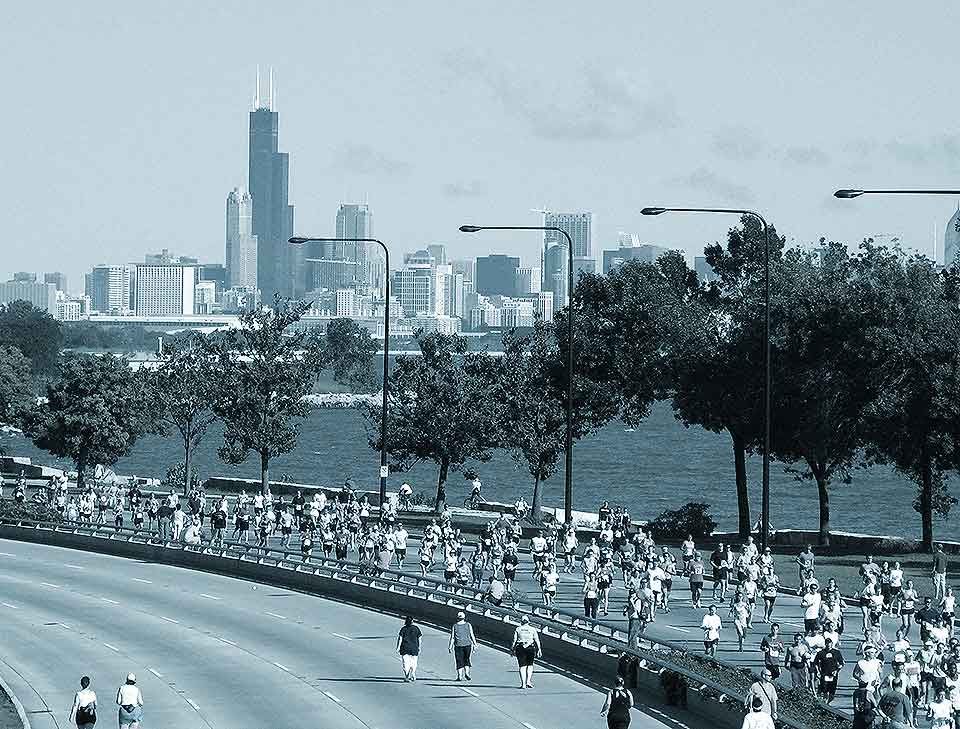
The Chicago Half Marathon is one of the city's best-known road races, run largely along the Lake Michigan shoreline with the kind of flat, fast course profile that draws runners specifically chasing a personal record. This guide covers the course, race-day logistics, typical weather, and what to do in the city around race weekend.
Chicago Half Marathon Course
The race starts and finishes in Chicago's Jackson Park, just south of the Museum of Science and Industry. Jackson Park was originally built to host the 1893 World's Fair and covers more than 600 acres of green space, which gives the start and finish area room to handle a large field without much congestion.
The course is an out-and-back: the first few miles circle the perimeter of Jackson Park before the route heads north along Lake Shore Drive toward Burnham Park. Lake Shore Drive is the course's signature stretch — a wide, flat roadway running directly along Lake Michigan, with the Chicago skyline visible for much of the route. It's also a well-known filming location; scenes from Ferris Bueller's Day Off, Risky Business, and My Best Friend's Wedding were shot along this stretch, and the John Hancock building is visible from several points on the course.
 Chicago is a fun and vibrant city with plenty of scenery both during and after the half marathon.
Because the course runs along an open lakefront roadway with few turns, it's consistently rated as one of the flatter, faster options among major-city half marathons — a good fit if your training has been building toward a specific goal time rather than a scenic but hilly course.
Race Organization and Logistics
The Chicago Half Marathon has a reputation for solid organization, with aid stations spaced along the route serving both water and sports drink, and on-course entertainment in the form of local bands and spirit squads at several points. Long-sleeve technical shirts and finisher medals are standard for the race, though specifics vary year to year — check the current race page for exact offerings.
Corrals and pacing: Runners are assigned to starting corrals based on projected finish time, with faster runners placed toward the front to reduce early congestion. Official pace groups are typically offered for a range of common goal times. Because Lake Shore Drive stays open to other traffic patterns during the race, organizers generally ask runners to maintain a minimum pace to stay on the main course; runners outside that pace may be directed to a parallel path with its own support. Confirm current pace requirements and corral details on the race's official site, since these are exactly the kind of details that change from year to year.
Awards: Age-group and overall awards are standard for the top finishers in both the open and masters divisions — check current award categories on the official race page.
Expo: A health and fitness expo is typically held in the days before the race, where you'll pick up your bib and shirt. Exhibitors usually include gear retailers, nutritionists, trainers, and race charity partners. If you want to browse without long lines, an early expo visit is usually your best bet.
Weather to Expect
The race has traditionally been run in September — verify the current year's date when you register — and Chicago at that point in the season tends toward mild to moderately warm conditions, with morning temperatures typically ranging from the 50s to low 70s°F. That's comfortable for most runners, though it's worth checking the extended forecast in the week leading up to race day. September is also one of Chicago's wetter months on average, so pack for the possibility of rain. The open lakefront section of the course means wind off Lake Michigan can make the morning feel cooler than the air temperature alone suggests; light, layerable clothing you can shed early is usually the right call.
Registration
Registration for the Chicago Half Marathon typically opens well in advance of race day and closes once the field reaches capacity, with entry fees generally increasing in tiers as the race approaches — register early if you want the lowest price and the most certainty about a spot. For current pricing, field caps, and registration deadlines, check the Chicago Half Marathon's official website directly rather than relying on any third-party listing, including this one.
Post-Race Guide to Chicago
Chicago rewards runners willing to turn race weekend into a full trip. Beyond the lakefront views on course, the city has an unusually dense cluster of attractions within easy reach of downtown:
- The Museum of Science and Industry, right next to the start/finish area in Jackson Park
- The Field Museum and Art Institute of Chicago, both classic Chicago cultural stops
- Millennium Park, home of "The Bean" and a short walk from most downtown hotels
- Wrigley Field, if your race weekend overlaps with the baseball season
- The John Hancock Observatory, for skyline views that put the course you just ran into perspective
If you're building a full destination-race trip around Chicago, our guide to iconic US half marathons covers how Chicago compares to other fast-course options, and how to find a half marathon walks through vetting any race — including this one — before you register.
Frequently Asked Questions
What kind of course is the Chicago Half Marathon?
It's an out-and-back course starting and finishing in Jackson Park, heading north along Lake Shore Drive with Lake Michigan on one side and the city skyline on the other. It's generally regarded as flat and fast, which is why it's a popular choice for runners chasing a personal record.
How are pace groups and corrals organized at the Chicago Half Marathon?
Runners are seeded into starting corrals based on projected finish time, with faster runners placed toward the front, and organizers typically offer several official pace groups for common goal times. Confirm current corral assignment and pace group offerings on the race's official registration page, since these details can change year to year.
What's the weather typically like for the Chicago Half Marathon?
The race is typically held in September — check the official race site for the current year's date. Chicago's weather at that time of year tends to be mild to moderately warm, with morning temperatures usually in the 50s to low 70s°F. Lake-effect wind along Lake Shore Drive can make it feel cooler than the forecast, so dress in light layers you can shed early.
What should I do in Chicago before or after the race?
The city rewards a full weekend trip — the Museum of Science and Industry sits right next to the start in Jackson Park, and the Art Institute of Chicago, Millennium Park, Wrigley Field, and the Field Museum are all easy to reach from downtown for a day before or after the race.
Related Articles
Big Sur Half Marathon Guide: Complete Runner's Guide to Monterey's Coastal Classic
Discover everything you need to know about the Big Sur Half Marathon on the Monterey Peninsula. From the stunning coastal course and training tips to race day logistics and local attractions, this comprehensive guide prepares you for one of California's most scenic races.
Rock n Roll Half Marathon Series: The Ultimate Guide to Running's Biggest Party
Discover everything about the Rock n Roll Half Marathon Series - where running meets live music. From Las Vegas night runs to Nashville's music mile, learn how to train, choose your race, and join the world's largest running party.
Brooklyn Half Marathon Guide
A flat, fast course from Prospect Park to the Coney Island boardwalk — what to expect from the Brooklyn Half Marathon's route, logistics, weather, and entry process.
10 Beautiful Half Marathon Courses You Need to Run - Scenic Races Worldwide
Discover the world's most stunning half marathon courses that combine breathtaking scenery with unforgettable running experiences. From coastal paths to mountain vistas, wine country vineyards to historic cities, these 10 races offer beauty beyond the finish line.