Half Marathon Recovery: The First Hour, First 48 Hours, and Return to Running
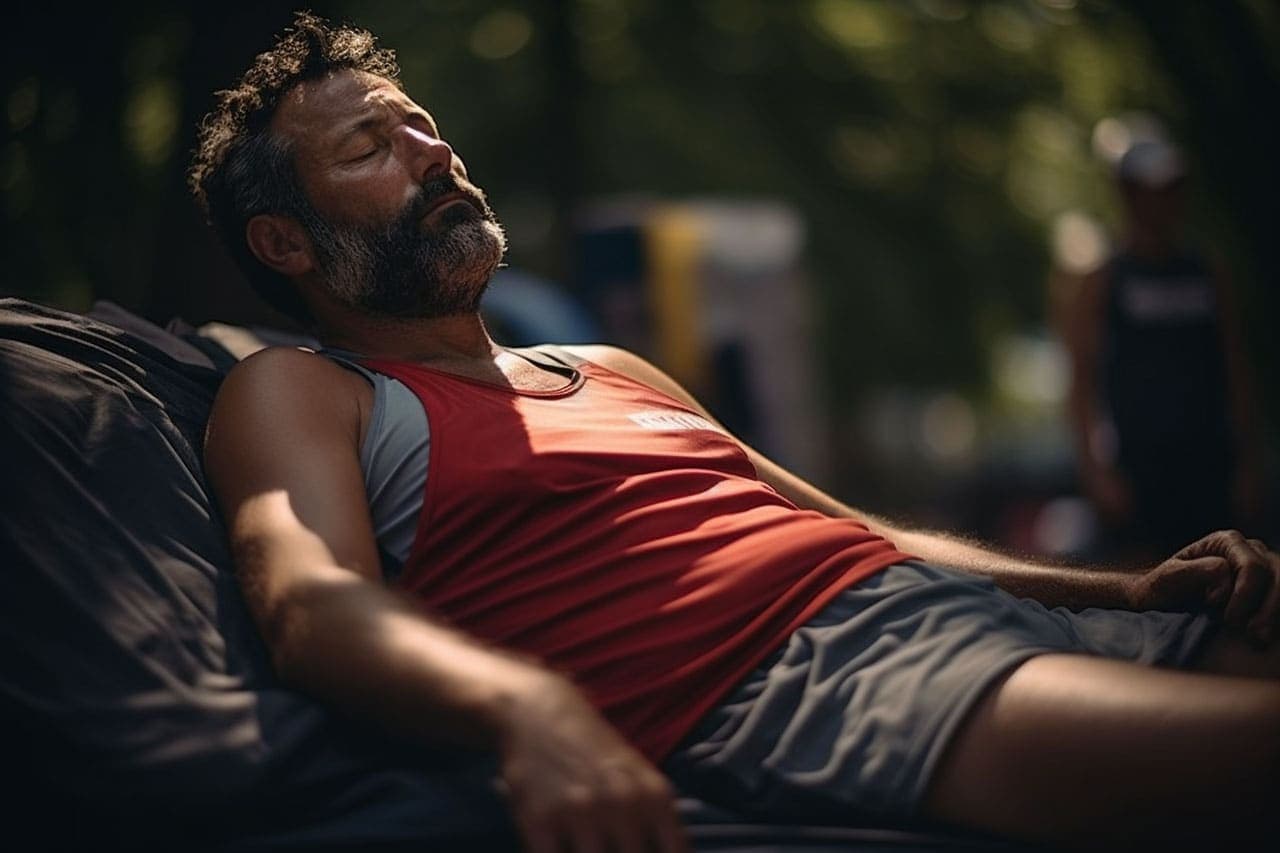
Crossing the finish line is the headline moment, but what you do in the hours, days, and weeks afterward has more influence on how quickly you're back to normal running than almost anything you did in the final miles. This guide covers the physical recovery timeline only — muscle repair, refueling, sleep, and your return to running. For the mental and emotional side of processing a race, see our dedicated guide to mentally recovering after a half marathon.
The First Hour: Keep Moving, Then Refuel
Immediately after finishing, your instinct will be to stop and sit down. Don't — at least not yet. For the full timed cool-down sequence (keep walking, then stretch), see our race-day warm-up and cool-down routine. The short version: walk for 5-10 minutes before you stop moving entirely, since a sudden stop after sustained effort can cause blood to pool in your legs and contribute to light-headedness.
Refueling window. Within 30-45 minutes of finishing, eat something with roughly a 3:1 or 4:1 ratio of carbohydrate to protein — this ratio matters because your muscles are primed to restock glycogen quickly right after exertion, and the protein supports the repair process that's already starting. Practical options:
- Chocolate milk (a genuinely well-studied recovery drink for this ratio)
- A banana with a tablespoon of peanut butter
- A recovery shake or bar formulated around a similar carb-to-protein ratio
- A bagel with a couple of eggs, if you can manage a fuller meal that quickly
Follow up with a complete, balanced meal within about 2 hours — this doesn't need to be complicated, just don't skip it because you're tired or your stomach feels off.
Hydration. Water is the priority, but if you sweated heavily (a hot race, or a shirt you could wring out), add an electrolyte drink to replace sodium and other minerals lost to sweat. A rough gut check: if your urine is still notably dark several hours post-race despite drinking water, keep drinking.
The First 48 Hours: Sleep, Light Movement, and Managing Soreness
Sleep is the highest-leverage recovery tool you have. Your body does the bulk of its tissue repair during deep sleep, so prioritize getting to bed on time the night of the race and the night after, even if adrenaline or a later-than-usual race-day schedule makes that tempting to skip. If you can fit in a short nap the day of the race, that helps too.
Expect soreness to peak around 24-48 hours post-race, not immediately. This delayed-onset muscle soreness (DOMS) is a normal response to the eccentric loading your quads and calves absorbed over 13.1 miles, and it should feel like generalized stiffness and fatigue rather than a sharp, localized pain.
Active recovery beats total rest for most runners. Light activity — a 20-30 minute walk, easy cycling, or swimming — promotes blood flow that helps clear waste products and reduce stiffness faster than sitting still. Keep the effort genuinely easy; this isn't training, it's circulation.
Massage and self-massage. A professional massage 24-48 hours post-race can help with circulation and muscle tension, though it's optional and not essential. Foam rolling at home is a reasonable substitute — spend a few minutes each on your calves, quads, and hamstrings, using slow rolls rather than aggressive pressure on anything that feels acutely sore rather than generally tight.
When soreness is a red flag, not normal DOMS:
- Sharp, localized pain (especially in a joint or on one specific spot of a bone) rather than generalized muscle soreness
- Swelling that doesn't improve after a day or two
- Pain that gets worse on day 3 or 4 instead of gradually easing
- Any pain that changes your gait even at a walk
Any of these warrants a visit to a doctor or physical therapist rather than pushing through on the assumption it's "just soreness."
Days 3-14: A Return-to-Running Timeline
There's no universal formula here — recovery speed depends on your training base, the race's difficulty, and how your body specifically responds — but this is a reasonable default for most half marathon finishers:
| Days post-race | What to do |
|---|---|
| Days 1-3 | No running. Walking, light stretching, and optional easy cross-training (swimming, easy cycling) only |
| Days 4-5 | If soreness has clearly faded (not just "manageable"), a short easy run of 15-20 minutes is reasonable |
| Days 6-9 | Gradually increase easy run duration, still well below your normal training pace, with rest or cross-training days mixed in |
| Days 10-14 | Return to something close to your normal easy-run volume; hold off on speed work or another hard effort until you're confident soreness and fatigue are fully resolved |
Two things override this schedule in either direction: if you feel genuinely great by day 3, there's no rule against an easy short run then — just keep it truly easy. And if soreness or fatigue is still noticeably present at day 7, extend the timeline rather than forcing it; running through unresolved fatigue is a common path to overuse injury in the weeks after a race.
The Bottom Line
Recovery isn't the passive part of your training cycle — it's where the adaptation from your race and the preceding months of training actually gets locked in. Treat the first hour, the first 48 hours, and the following two weeks as seriously as you treated race week itself, and you'll come back to training stronger and with a lower injury risk than if you rush straight back into hard miles.
Frequently Asked Questions
What should I eat immediately after a half marathon?
Aim for a snack or meal within 30-45 minutes that combines roughly 3-4 parts carbohydrate to 1 part protein, such as chocolate milk, a banana with peanut butter, or a recovery shake, then follow with a full balanced meal within 2 hours. This window is when your muscles are most efficient at replenishing glycogen and starting repair.
How many days should I take off running after a half marathon?
Plan on 3-5 full days off running, followed by very easy, short runs for about a week before returning to normal training volume around 2 weeks post-race. Soreness that's still sharp or worsening past day 5, rather than gradually fading, is a signal to extend the rest rather than push through it.
Is it normal to feel sore for several days after a half marathon?
Yes, delayed-onset muscle soreness typically peaks 24-48 hours after the race and gradually fades over the following 3-5 days. It should feel like generalized muscle fatigue and stiffness, not sharp or localized pain — sharp pain, swelling, or pain that worsens rather than improves warrants seeing a doctor or physical therapist.
What is the difference between physical and mental recovery after a race?
Physical recovery covers muscle repair, glycogen replenishment, sleep, and your gradual return to running volume, while mental recovery covers processing how the race went, managing post-race letdown, and rebuilding motivation for your next goal. Both matter, but they run on different timelines and benefit from different strategies — see our guide to the mental side of race recovery for that half of the picture.
Tags
Related Articles
Conquering Your First Half Marathon: Top Race Day Tips
Your complete first half marathon race day checklist: training and taper, what to wear, fueling and hydration, your warm-up, mindset at the start line, pacing, and recovery, with links to the full guide on each so you never toe the line unprepared.
The Ultimate Guide to Finding and Choosing Your Perfect Half Marathon
Comprehensive guide to finding and choosing the perfect half marathon. Learn about race types, seasons, registration strategies, and how to build your racing calendar.
How to Finish a Half Marathon Comfortably: Effort, Walk Breaks, and Aid Stations
A race strategy built around finishing strong, not just finishing: how to distribute effort across three phases, when to plan walk breaks, and how to work aid stations without losing time or momentum.
Mastering Race Day Nutrition: Fueling for a Successful Half Marathon
What to eat and drink on half marathon race day: carb-loading in the days before, race-morning breakfast timing, in-race fueling, and how to recover afterward.